


Explore your next steps
Your guide to singing lessons in Leicester
Practical ideas for choosing songs, developing your voice and making lessons work for you.
01
Getting started
Bring a song, not a perfect performance
Choose two or three songs you enjoy and tell me what attracts you to them. A simple melody can offer plenty to explore: the way a phrase starts, the clarity of a word or a change in rhythm. You do not need to impress me before we can begin. If you feel nervous, say so. We can work with a short section and build a familiar routine rather than sing an entire song immediately.
What we do with a difficult passage
Repeating the whole song can make it hard to notice what needs attention. Instead, we can separate the words, rhythm and melodic shape, then bring them together. Piano-led warm-ups help us explore particular tasks before applying them to music. You can ask why we are doing an exercise and how it relates to your song. Private singing lessons give us time to compare attempts and discuss the detail you noticed, turning feedback into something you can practise. Read more about what happens in a lesson.
Different ages, different starting points
I generally teach children from age seven, teenagers and adults. For a younger child, please enquire so we can discuss whether lessons are suitable. There is no upper age limit. When enquiring for a child, include their age and discuss supervision and safeguarding arrangements with me. A younger learner may enjoy a familiar chorus, while an adult returning to singing might want to revisit a particular piece. Neither needs to follow someone else’s pace. Tell me about previous music-making and any worries so we can choose material with a clear purpose.
Musical theatre and your own interpretation
A recording is useful for learning a tune, but it is not a requirement to reproduce another artist’s voice. We can discuss the meaning of the words, the character in a musical theatre song and the shape of a phrase. Your own voice is the starting point, rather than an attempt to reproduce someone else's tone. Sometimes changing the key or slowing a passage helps reveal a musical choice. Your interests guide the repertoire, with room to try unfamiliar material when it supports your goals.
Choosing a vocal coach for your music lessons
Tell a prospective vocal coach what you would like to learn, the styles you enjoy and any previous experience. Ask how they explain technique and how you will know what to practise between sessions. Complete beginners can bring the same questions as experienced singers: you do not need to prove your vocal ability before asking for help.
In my lessons, your interests and starting point shape the work. An exercise should connect with something you can hear or use in a song, rather than feel like an unrelated test. Tell me when an explanation helps and when you need a different example. We can take your available time into account when choosing the next task.
02
Practice & progress
Develop your vocal ability one task at a time
A practice session becomes easier to manage when you know what you are listening for. Work on a short phrase with one focus, such as a steady entry or clearer words. Vocal ability includes timing, pitch and expression as well as high notes, so choose a task that helps the song instead of judging progress by range alone. Try it, listen and make a small adjustment. Keep a brief note of what helped and what remains confusing. You do not need to arrive at the next lesson with everything solved; your questions tell us where to spend time.
Use recordings thoughtfully
A private phone recording can help you hear timing and phrasing from a different perspective. Listen for the task you chose rather than judging your entire voice. Compare two attempts and identify a specific difference. You do not need expensive equipment or a public social media account. Ask permission before recording another person, including during a shared lesson, and agree how any recording will be used.
Build musical understanding
We can connect practical singing with aural skills, notation and theory when these help you understand a song. Counting an entry, recognising a repeated pattern or following a score can make practice more independent. I support ABRSM theory Grades 1–5 and singing work through Grade 5, but exams are optional. If you want a qualification, bring the syllabus and deadline so we can plan suitable preparation.
Keep a realistic routine
Tell me what time and space you have available. A useful routine should fit your week rather than rely on an ideal uninterrupted evening. We can choose a manageable task and review it next time. Online accountability and practice support is also an option to discuss; it is a separate service, so ask about the format and fee. Progress varies across tasks and songs, and there is no fixed timetable you have to match.
Listen for changes in tone and expression
Choose one line and try placing emphasis on a different word. Notice how that changes the message, even when the melody stays the same. Singers can create contrast through phrasing and timing as well as volume. Listen for whether your words remain clear and whether the sound communicates what you intended. There is no single tone you must copy.
A familiar pop song, a rock ballad or a jazz recording can offer different listening examples. Compare the choices you hear rather than assuming every style needs the same approach. Bring one observation to your next lesson so we can connect listening with practical work.
03
Lesson options & costs
Singing lessons in Leicester: lengths and prices
Individual lessons cost £19 for 30 minutes, £25 for 40 minutes or £38 for an hour. We can arrange weekly, fortnightly or occasional sessions. Please agree availability, payment and booking terms before your first lesson. Four half-hour sessions total £76, four 40-minute sessions total £100 and four hour-long sessions total £152. These examples are not monthly subscriptions. See prices and paired options before deciding which length fits your needs.
Prepare for your visit or Zoom lesson
I teach from my home teaching space on Clarendon Park Road, Leicester, LE2 3AH. I provide the full address when we arrange a lesson. Please tell me about any access requirements before booking. Online singing lessons via Zoom are also available. Bring your song ideas and any material you already use. For online lessons, test your microphone, speakers and connection in advance and keep backing tracks available on a separate device if we agree that setup. See location and arrival information.
Learning with a friend or sibling
A paired lesson gives you opportunities to listen to another voice and work on shared timing. It also needs material and a pace that suit both people. I offer pairs of a similar age from seven upwards, with separate advertised rates. Discuss your aims together and ask whether a pair, an individual lesson or a larger group would be the most useful starting point.
Agree the practical details
Before confirming a session, discuss the time, length, fee and payment arrangements. Ask how cancellations or changes are handled, and explain any access or supervision requirements. If buying a gift voucher, check its expiry and how the recipient books. A clear agreement helps everyone know what to expect. You can send an enquiry without having decided on a long-term lesson plan.
04
Performance & local music
Vocal coaching for auditions and performances
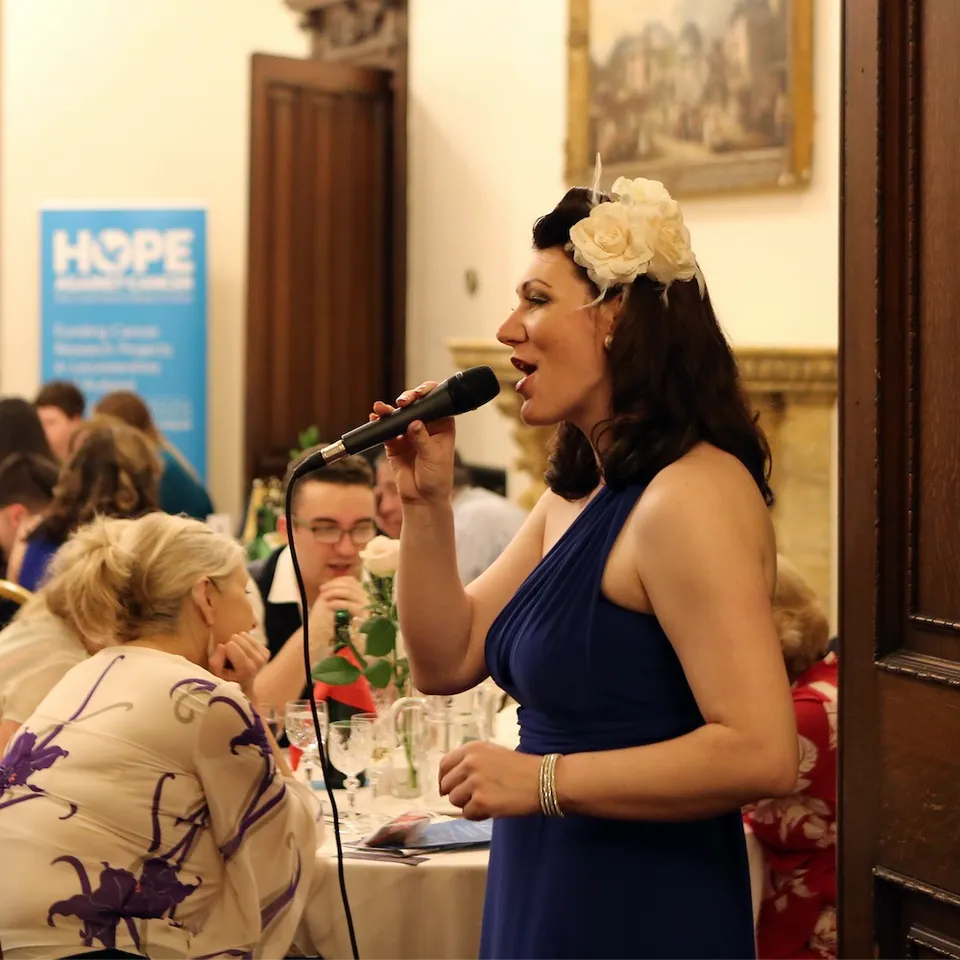
A wedding song, audition or recording gives us a specific task to work towards. Vocal tuition can connect the technical work with what you want to communicate to your audience. Bring the date, format and any requirements so we can choose appropriate material. Preparation can include microphone technique, interpretation, stage presence and how to introduce a song. We can rehearse the start and finish as well as the difficult middle section. You can also learn entirely for yourself without taking on a public performance.
Sing with other people
Group singing asks you to hear your own line while noticing shared timing and balance. The Leicester Events Choir is another route to explore, with repertoire across pop, gospel, barbershop and world music. Ask about the current rehearsal arrangements and membership before attending. Joining a choir and taking individual lessons are different choices; you can discuss whichever appeals to you.
Listen around Leicester
A live performance can give you ideas about phrasing, pacing and communication with an audience. Our venue guide offers starting points, while the local musicians guide suggests listening questions. Notice one detail you would like to discuss in a lesson. Check current programmes, age restrictions and access with the venue before booking a visit.
Buy or book for a clear purpose
You do not need a professional recording session or your own PA to start singing lessons. If you do have a performance or recording project, our music shop guide and studio guide explain useful questions to ask. Start with your intended use, budget and existing equipment. To begin lessons, simply tell me about your music and availability.
Short courses and one-off coaching
You may have a particular occasion in mind rather than a regular weekly plan. Short courses and one-off coaching can focus on a wedding song, audition or another agreed performance task. Explain the date and what you need to prepare so we can discuss a realistic scope. You can also learn for fun: enjoying a song in everyday life is a worthwhile reason to sing.